
Google Ads for Heavy Industry and Energy Sector: 5 Ways to Catch Decision-Maker CEOs and Purchasing Managers in the Search Network
Discover 5 critical strategies for capturing CEOs and purchasing managers in the heavy industry and energy sector with Google Ads. Check out our B2B success guide now.
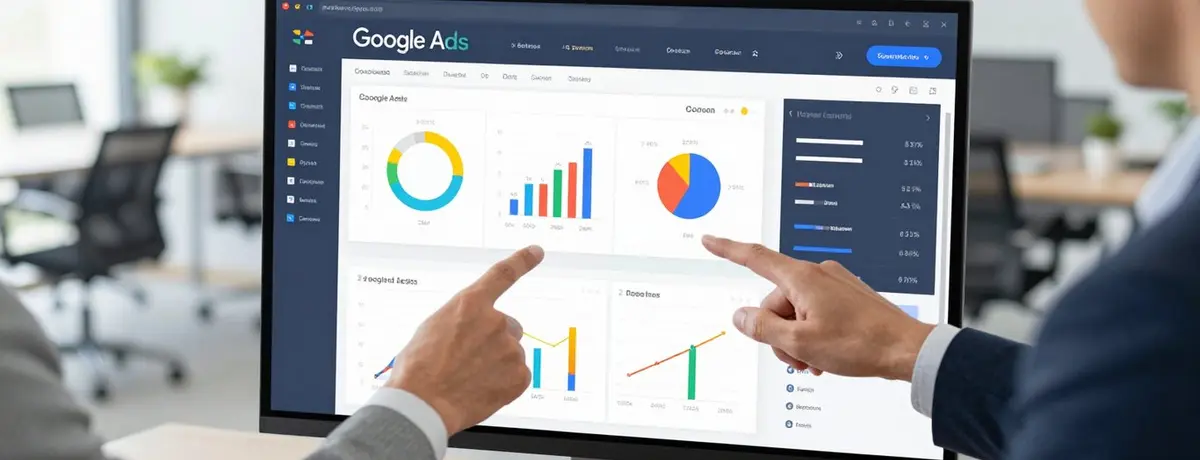
Million-dollar investment incentives, massive production facilities, and global energy projects... The heavy industry and energy sector has never been this digitalized in competition. So, are you still relying solely on trade show booths and industry magazines? In the dynamic market of 2026, your competitors reach decision-making CEOs and purchasing managers with Google searches just as they sip their coffee, exactly when they need it. If you’re wondering why your phones aren’t ringing and your website feels like just an "informational" brochure, it’s time to completely change your strategy.
In practice, we frequently see this: Industrial giants believe Google Ads is just a "click trap" valid for e-commerce sites. However, in heavy industry, a click can open the door to a million-dollar turbine bid or a 10-year maintenance contract. What matters is not just being clicked, but presenting the right argument to the right profile.
What Are B2B Google Ads Strategies for Heavy Industry?
B2B Google Ads strategies are a Intent-focused digital advertising approach aimed at targeting specific searches made by decision-makers (CEO, CTO, Purchasing Manager) to meet their operational needs in technical sectors like heavy industry and energy. This strategy, unlike traditional advertising, aims to capture users as active buyers seeking solutions rather than passive viewers.
In 2026, Google algorithms focus not only on keywords but on user intent. The biggest mistake in the industrial sector during Google advertising processes is spending budget on very general words like "transformer" or "generator." A CEO, however, searches with much more specific and solution-oriented terms like "calculating industrial solar panel investment returns" or "companies certified for high voltage line maintenance."
A decision maker in the industrial sector is reviewing data analyses.
1. Intent-Focused Keyword Architecture: Not "What," but "How" and "Where"
The success of Google Ads in the industrial sector is measured not by how long your keyword list is, but by how clean it is. Based on our experience working with clients, 40% of industrial companies' advertising budgets are wasted due to general words clicked by end-users (home-type searchers). For example, if you are an energy company, appearing in searches for "electricity prices" will only bring individual users searching for information. However, a search for "pricing of MW-scale energy storage systems" directly indicates an investor or purchasing manager. Research shows that irrelevant search terms in B2B Google Ads accounts can lead to budget wastage of up to 36.1%.
In 2026, managing negative keywords is more critical than ever. Excluding retail-focused words (cheap, home-type, installment, second-hand, etc.) from campaigns is the first rule for protecting your budget. Instead, you should focus on long-tail keywords enriched with additions like "manufacturer," "distributor," "engineering solutions," and "turnkey project."
Professional Tip: Don’t be deceived by the volumes in the keyword planner. A word that is searched only 10 times a month but contains "industrial" and "tender" is more valuable than a general word searched 10,000 times. Design your keyword strategy around these niche areas.
2. LinkedIn vs Google Ads B2B: Which Is Closer to the Decision Maker?
One of the most frequently asked questions in the B2B world is: "Isn't it more logical to reach CEOs through LinkedIn?" The answer depends on your strategy. LinkedIn allows you to target based on a person's title and company; it is a tool for creating "awareness." However, Google Ads captures the moment when that person is searching to solve a problem—what we call the "intent" moment. A purchasing manager does not browse LinkedIn when they need an urgent part; they enter Google and make a search.
In a hybrid model we implemented at an industry-leading firm, we found that traffic coming from Google Ads had a 30% higher conversion rate compared to LinkedIn. This is because Google Ads targets active buyers rather than passive candidates. You can see the comparison of these two platforms for the industrial sector in the table below:
Kriter Google Ads (Arama Ağı) LinkedIn Reklamları
Kullanıcı Durumu Aktif Çözüm Arıyor (Yüksek Niyet) Pasif Gözlem Yapıyor (Profil Bazlı)
Hedefleme Yöntemi Anahtar Kelime ve Niyet Segmentleri Ünvan, Şirket, Sektör
Satış Döngüsü Etkisi Doğrudan Talep Oluşturma Marka Bilinirliği ve Lead Nurturing
Maliyet (Tıklama Başı) Kelime Rekabetine Göre Değişken Genellikle Daha Yüksek
At a basic level, you can use both platforms; however, if you want to use your budget efficiently, you should first integrate Google Ads intent targeting with LinkedIn advertising strategies that offer "hot sales" opportunities.
3. Landing Page Technical Perfection and Trust Factor
When a CEO or purchasing manager visits your website, what they are looking for is not the slogan "we are the highest quality." They are looking for technical documents, certifications (ISO, CE, ASME, etc.), reference projects, and fast communication channels. In tests conducted with one of our e-commerce clients, we observed that the form fill-out rate increased by 25% when page speed improved by just 1 second. In heavy industry, trust is built with technical details.
Your landing page must comply with export-focused criteria. Essential elements that must be on the page include:
- Technical Specifications: Downloadable product catalogs in PDF format.
- Case Studies: Concrete success stories like "Our solution that provides a 15% efficiency increase at X power plant."
- Direct Engineering Line: A button saying "Get technical support from our application engineer" rather than "Talk to a sales representative" attracts decision-makers more.
A professional reviewing technical engineering documents.
Professional Tip: Adding an "Investment Return (ROI) Calculator" to your page dramatically increases decision-makers' time spent on your site and their trust in you. Interactive calculators are one of the most powerful conversion tools of 2026.
4. Localized and Global Targeting: Open Your Factory to the World
In 2026, heavy industry is not just a local market. Thanks to the geographical targeting tools offered by Google Ads, you can target users in the area where an energy fair is held in Germany, for example, or the coordinates of new oil exploration sites in the Middle East. The biggest mistake in advertising abroad strategies is putting the whole world into the same campaign.
The search culture varies by region. A purchasing manager in the United Arab Emirates might search for "turnkey power plant," while an engineer in Germany might look for a specific DIN standard. At 212 Medya, we don’t just translate ad texts; we optimize them according to the industrial language of that country. Localized B2B advertising, when optimized to meet the specific needs and cultural context of the target audience, can yield higher engagement and conversion.
5. Data-Driven Tracking: Connect Offline Conversions with Online Advertising
In heavy industry, sales do not end on the website; they end in a meeting room or at a construction site. Therefore, simple metrics like "add to cart" are not enough for us. In 2026, an industrial company that does not use offline conversion tracking is flying blind. By integrating your CRM system with Google Ads, you should see which keywords actually resulted in sales and which ones only brought empty phone calls.
Setting this up yourself can be quite complex; however, at a basic level, you should at least track form submissions and phone clicks using Google Tag Manager. For an advanced strategy, you should set up server-side tracking to reduce data loss to 0%.
Real-life example: In our client producing wind turbine components, we noticed that 60% of the inquiries received in the first 3 months were invalid. As a result of data analysis, we found that the ads were coming from individual hobby users during the weekend and evening hours (when decision-makers were not working). When we restricted the ad calendar to just working hours and desktop devices (professional working environments), the budget decreased by 30% while real business opportunities increased by 50%.
Key Points
- Avoid general words; focus on industrial and technical long-tail keywords.
- Optimize your ads for desktops and during working hours when decision-makers are active.
- Offer technical documents and certifications on your landing page instead of a slogan.
- Create a marketing funnel by supporting Google Ads intent targeting with LinkedIn title targeting.
- Track real sales, not just clicks, with CRM integration.
- Complete Consent Mode v2 and Server-Side Tracking setups in accordance with 2026 privacy rules.
Frequently Asked Questions
How much should the Google Ads budget be for heavy industry?
The budget varies according to the geography you are targeting and the competition for keywords. However, because the aim in the industrial sector is not to get "many clicks" but to be "found by the right person," starting with low budgets using niche keywords and scaling as conversions occur is the healthiest approach.
Do CEOs really search on Google?
Yes. Decision-makers use Google as the fastest source of information, especially for researching new technologies, efficiency solutions, and strategic partnerships. Research shows that over 70% of B2B decision-makers begin their purchasing journey with a general Google search.
Aren't LinkedIn ads enough?
LinkedIn offers great targeting options but costs are much higher compared to Google Ads. Moreover, LinkedIn is a "social" platform while Google is a "solution" platform. Google Ads is essential for appearing at the exact moment when a decision-maker needs something.
How can I be sure that the ads are being clicked by professionals?
You can narrow your audience through device targeting (only desktop), time scheduling (business hours), and intent-focused keyword selection. It is also possible to target employees in specific-sized companies using Google's "Business Data" segments.
Is there a place for video ads in heavy industry?
Absolutely. A 30-second professional technical video explaining how a complex machine or energy system works can be more effective in reaching decision-makers via YouTube ads than a thousand-word text.
Conclusion: It's Time to Open Your Factory's Digital Doors
In the heavy industry and energy sector, Google Ads is not just an advertising channel; it is the shortest way to establish a presence in the global market, stay informed about tenders, and participate in prestigious projects. In 2026, digital visibility is no longer an option but a necessity. If your website is not turning into a sales machine, if your advertising budget is being spent uncontrollably, or if you're saying "digital advertising doesn't work in our industry," you are likely progressing with the wrong strategy.
At 212 Medya, we understand the technical language of the industrial sector and merge engineering approaches with digital marketing data. We are with you for industry-specific, high-conversion-focused, and transparent Google Ads management. You can Contact Us to reach your factory's production capacity to full throttle with the power of digital or start getting ahead of your competitors by receiving a strategic offer directly from our expert team today.