
Cultural UI/UX Compatibility in the Global Market: Why Can't You Use the Same Design for the Middle Eastern and European Markets?
Language translation is not enough for success in the global market! Discover the UI/UX differences between the Middle East and Europe, and increase your conversion rates in e-export with 2026 strategies.
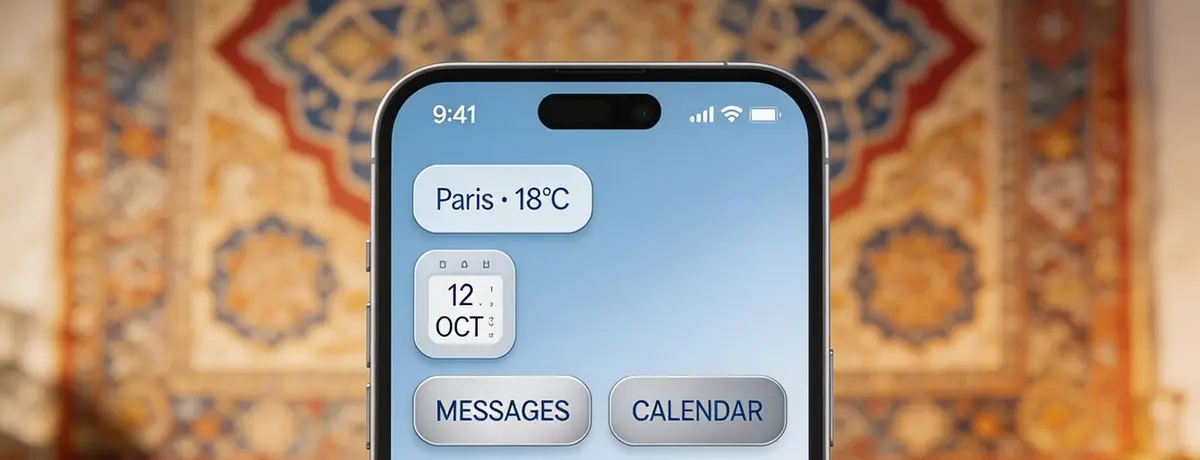
Do you think you are doing everything right in your e-export operations? Your products are of high quality, your logistics network is solid, and you allocate a significant portion of your budget to advertising campaigns. However, the data tells a completely different story: your conversion rates that work seamlessly in the European market are hitting a wall in the Middle Eastern market. Users come to your site, glance for a few seconds, and leave never to return. If you are experiencing this familiar scenario, the problem is probably not in the translation, but rather in the cultural DNA mismatch of your design.
By 2026, competing in the global market no longer just means having an "English website." Today's conscious consumer does not trust platforms that do not appeal to their cognitive habits or feel foreign. The expectations of a user in the Middle East and a manager in Germany from a website are diametrically opposed, not just aesthetically but also psychologically and functionally.
What is Cultural UI/UX Compatibility? Why is it Vital?
Cultural UI/UX compatibility is the optimization of the user interface and experience elements of a digital product (website or mobile application) according to the local habits, psychological expectations, and cultural values of users in the targeted geography. This process encompasses not only the translation of texts but also the reconstruction of layout, color theory, iconography, and user journey according to the cultural codes of that region.
In practice, we often see this: Many brands carry their minimalist and "cold" design language, created for Europe, directly to the Saudi Arabian or United Arab Emirates market. The result? A brand image perceived as "unsafe and empty" in the Middle Eastern market. However, a successful international SEO service and marketing strategy should give the user the feeling of "this is made for me" in the first millisecond they enter the site.
Comparison of Differentiated UI Design for European and Middle Eastern Markets
Beyond Reading Direction: The Psychology of RTL (Right-to-Left) Architecture
The biggest mistake made when addressing the Middle Eastern market is simply aligning the text to the right. In fact, RTL (Right-to-Left) compatibility requires mirroring the entire mental model. The user's eye starts from the top right corner of the screen and follows this direction while drawing an "F" or "Z" pattern. If you leave your navigation menu or critical CTA (Call to Action) buttons on the left as per European standards, your potential customer in the Middle East will ignore these elements.
Professional Tip: Mirror not only the texts but also progress bars, back buttons, and even visuals that contain chronological ordering. For instance, a graph showing the flow of time should flow from left to right in Europe, but it should be structured from right to left in the Middle East. This small detail reduces the user's cognitive load and increases the likelihood of conversion.
Based on our experience working with clients, a poorly mirrored RTL design can increase the site's bounce rate by up to 60%. The moment a user feels the site is foreign to them, the bond of trust is broken. At this point, no matter how strong your strategy for advertising to Arab countries is, if your landing page does not provide this cultural compatibility, your budget is going to waste.
Cultural Semantics of Colors and Typography
Colors are not universal. White, which represents "purity" and "minimalism" in Europe, may represent mourning in some Asian cultures. Similarly, while green is associated with sustainability and the environment in Europe, in the Middle East it is the strongest representative of holiness, prosperity, and prestige. In the 2026 digital marketing world, when choosing your color palette, you need to consider not only your brand guidelines but also the anthropological data of the target market.
European Market: Functionality and Calm
In the European market, especially in the B2B segment, the philosophy of "less is more" prevails. Users do not appreciate unnecessary visual clutter; they want to access information quickly. In typography, sans-serif fonts and ample whitespace are indicators of professionalism. If you use aggressive colors and complex animations in this market, your brand may be labeled as "cheap" or "amateur."
Middle Eastern Market: Visual Richness and Trust
The situation in the Middle Eastern market, on the other hand, is the complete opposite. Empty spaces can be perceived as "lack." Visual richness, golden touches, deep greens, and high-quality visuals that establish a human connection build trust. In typography, the use of modern Arabic calligraphy that adheres to digital standards (modern interpretations of Kufi or Naskh styles) elevates the perception of locality.
Tasarım Unsuru Avrupa (Batı) Yaklaşımı Ortadoğu (MENA) Yaklaşımı
Mizanpaj Minimalist, geniş boşluklu Yoğun, zengin içerikli
Okuma Yönü Soldan Sağa (LTR) Sağdan Sola (RTL)
Güven Faktörü Sertifikalar, GDPR uyumu Sosyal kanıt, WhatsApp, insan yüzü
Renk Paleti Mavi, Gri, Pastel tonlar Yeşil, Altın, Canlı Kırmızı/Turuncu
Social Proof and Communication in Localized User Experience
The psychological triggers that affect users' purchasing decisions also vary by region. For a user in Europe, a "Trustpilot" rating or seal from an independent auditing organization may be sufficient trust signals. However, in the Middle East, trade is still largely "relationship-driven." Simply leaving an email address on an e-commerce site can undermine your sales in that market.
Implementation Suggestion: Always keep the WhatsApp icon visible in the bottom right corner (or bottom left if RTL) on sites prepared for the Middle Eastern market. Users want to know they can engage with a real person rather than a bot. For the European market, however, integrate data privacy (GDPR) emphasis into the design during the advertising process to European countries.
Speaking of a real-life example; by localizing just the trust logos and communication format on the payment page of one of our e-commerce clients, we increased the order completion rate from Gulf countries by 22%. While the "add to cart" button was sufficient for European users, the option "Buy Now and Get Support via WhatsApp" was much more convincing for users in the Middle East.
Technical Requirements in E-Export Website Management
Cultural compatibility is not just related to what is visible; the infrastructure must also be ready for it. By 2026 standards, when creating a global web design strategy, multi-currency, local payment methods, and dynamic content management (Headless CMS) should be the norm. For example, while credit cards and PayPal are common in Europe, "Cash on Delivery" is still indispensable in some segments in the Middle East. Your design should elegantly present these options.
Additionally, region-based speed optimization (using CDN) is vital. If you are receiving UI/UX design services, make sure your designer focuses not only on aesthetics but also on ensuring that the site opens in under 1.5 seconds on a fiber connection in Dubai and on a mobile network in Berlin. According to Google data, a 1-second delay in loading time can lead to up to 20% losses in mobile conversions.
The UI design process and analytical data by 2026 standards
Key Points
- Language is a Starting Point, Not an End: Simply translating words is not enough to achieve cultural compatibility; the entire interface must be mirrored.
- Psychological Color Selection: Strengthen brand perception by choosing color palettes that are appropriate for the cultural codes of the target market.
- Device Habits: The Middle Eastern market has approached a "Mobile-Only" mindset rather than a "Mobile-First" approach; designs should be mobile-focused.
- Trust Signals: Certifications and privacy are prioritized in Europe, while accessibility and personal communication (WhatsApp, etc.) are at the forefront for the Middle East.
- Reduce Cognitive Load: Smooth the experience by using iconography and navigation models that the user is accustomed to.
Frequently Asked Questions
Why is Google Translate or AI translation not sufficient?
AI can translate text but cannot organize cultural nuances, local idioms, and most importantly, visual hierarchy. A wrong visual choice or a poorly mirrored layout can damage your professional image.
Does RTL design significantly increase website costs?
If started with the right infrastructure (for example, modern CSS frameworks), the cost increase is minimal. However, if attempted to be added later, the entire design may need to be torn down and rebuilt, which can multiply the cost.
What colors are the safest choices for Europe?
Generally, combinations of navy blue, gray, and white, which represent trust and professionalism, yield the highest performance in the B2B and technology sectors.
Why is font selection difficult on Arabic sites?
Arabic characters are more complex compared to the Latin alphabet. Readability quickly diminishes at smaller sizes. Therefore, specialized fonts optimized for the web (like modern Arabic fonts offered by Google Fonts) should be used.
What is the difference between Localization and Translation?
Translation is about finding the equivalent of words; localization is about adapting the entire experience of the product (units of measurement, date formats, colors, visuals) to the local culture.
The Signature of 212 Medya in Global Vision
Being present in the global market is like a complex chess game. A wrong UI/UX move can make your entire marketing budget ineffective. As 212 Medya, we have been building digital bridges for both European and Middle Eastern market giants for years. With our experienced team, we develop not only visual designs but also user experience strategies tailored to the region. If you want your e-export site to "speak in its own language" in every geography worldwide, we are here with a professional vision.
You can reach out to us to establish your strategy on a professional foundation and regain the customers you lost due to cultural incompatibility. A well-designed user experience is the strongest key to your global success.