
Portfolio-Focused Web Design for Architectural Offices: Aesthetics or Functionality?
Discover the balance of aesthetics and functionality in portfolio-focused web design for architectural offices. Increase your conversion with 2026 trends and SEO strategies.
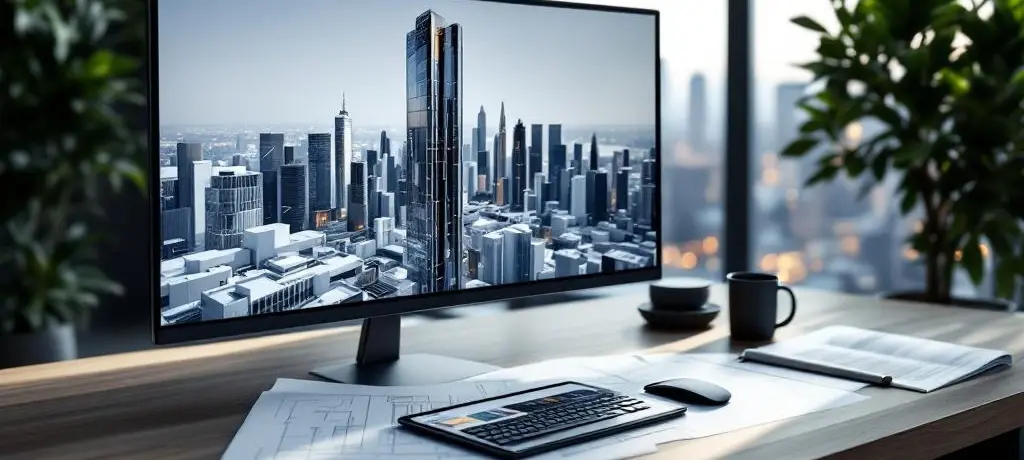
When a potential client visits your website, do they want to get lost among the captivating visuals of your projects, or do they want to find that critical project and contact you within seconds? For architectural offices, this question often turns into a deadlock where aesthetic concerns overshadow functionality. You may be losing 40% of visitors at the entrance page because the flawless renders you worked on for days in your office do not load within 10 seconds on your website. In practice, we often see this: Many architects conceptualize their digital presence as an 'art gallery,' forgetting how the user will navigate that gallery or which door they need to go through to request a quote. In the digital dynamics of 2026, we are in an era where it's not enough to be just 'beautiful'; speed and user experience (UX) determine conversion rates.
What is Portfolio-Focused Web Design for Architectural Offices? Portfolio-focused web design for architectural offices is a strategic website framework that centers on user experience and search engine optimization (SEO) principles while presenting the design language, vision, and completed projects of an architectural practice in the highest visual quality on a digital platform. This approach aims to transform visitors into potential clients by combining aesthetic excellence with technical performance.
According to our sectoral experiences, a successful architectural website is not just a visual repository. In 2026, the success of a website is measured by how high-resolution visuals (4K and above) are delivered without affecting page speed and how easily technical details of the project can be accessed on mobile devices. Based on our experience working with our clients, users are no longer content with just seeing a photo of a finished building; they want to experience the project's story, technical challenges, and solutions through an interactive flow.
Actionable Advice: Check the page load speed of the 5 most popular projects in your portfolio using Google PageSpeed Insights. If the LCP (Largest Contentful Paint) time is over 2.5 seconds, it means you are losing half of your potential clients before they even enter the site. At this point, working with a professional web design service to convert your visuals into next-generation formats (WebP or AVIF) can help you gain speed without compromising aesthetics.
Aesthetics or Functionality? The Balance of 2026 For architects, aesthetics is the soul of the brand. However, functionality is the skeleton that allows that brand to generate revenue. In 2026, this dilemma has evolved from 'Aesthetics vs. Functionality' to the concept of 'Aesthetics-Supported Functionality.' A website, no matter how prestigious it may be in design awards, cannot go beyond a commercial failure if its navigation menu is complicated on a mobile device or if switching between projects becomes a hassle.
Research shows that (for instance, Nielsen Norman Group user experience reports), users seek 'familiarity' on digital platforms. A common mistake made on architectural sites is to design navigation outside of the ordinary 'to look different.' In our UI/UX sessions with clients, we observe that placing the menu in the top right or a fixed left reduces user cognitive load and allows them to focus more on your projects.
Feature Aesthetically Focused (Error) Functional & Aesthetic (Correct) Visual Management Raw, massive file size visuals. Optimized, lazy-load enabled visuals. Navigation Hidden or experimental menus. Accessible, hierarchical, and intuitive structure. Text Usage Only project name and date. SEO compliant project story and technical details. Mobile Experience A scaled-down desktop version. Touch-friendly, mobile-first interface.
Actionable Advice: Count how many clicks are needed to access the 'About Us' or 'Contact' pages on your website. If this number exceeds 2, the information architecture of your site is flawed. You can perform a basic-level site map revision, but obtaining a UI/UX design service for a conversion-focused structure will minimize your visitor loss.
The Power of Visual Storytelling: New Trends in Portfolio Presentation In 2026, static photos are no longer sufficient on their own. Portfolio design for architectural offices must now combine storytelling with technical data. Visitors want to see not only the finished state of a housing project but also daylight analyses, sustainable materials used, and how the space changes throughout the day. At this point, video content and interactive sliders (before/after sliders) come into play.
In practice, we often see this: Clients hesitate to share technical drawings of their projects. However, showing the journey of a project from sketch to finish is the shortest way to prove your office's expertise and mastery of the process. As 212 Medya, we have measured that a 'process-focused' page structure in architectural portfolios provides 35% more 'time on page' compared to directly focused finish pages.
Additionally, the AI-powered visual recognition systems among the trends of 2026 can automatically present similar projects related to the image the user is viewing. This keeps the user engaged on the site for a longer time and increases trust in your brand. If your site does not have this type of technology, you can manually add a 'Similar Projects' section to increase navigation depth.
Case Study: Development of ArchiStudio ArchiStudio, a medium-sized interior architecture office, was only showcasing its high-resolution projects on its website. The visuals were amazing, but they had no visibility on Google and their phone was not ringing. In our analysis, we found that the 15 MB video used on the homepage took 12 seconds to load on mobile. We structured our strategy in three steps:
We converted all visuals to WebP format,
We added 500-word SEO-compliant texts focused on 'Problem-Solution-Result' for each project,
We fixed the 'Get a Quote' button at the end of each project page and in the navigation.
The result? Within six months, organic traffic increased by 120%, and the number of qualified customer forms coming through the website rose from 2 to 18 per month.
SEO and Architecture: How Does Google Find You? The biggest misconception for architectural offices is that a site does not need text since it should only be visual. However, Google's bots (still) cannot fully understand how 'minimalist' or 'brutalist' a building is just by looking at a photo. Potential clients looking to find you search for terms like 'luxury residential architectural offices in Istanbul' or 'sustainable office designs' on Google. If these keywords do not appear in the texts of your project, you will remain invisible.
In 2026, SEO is no longer just about keyword stuffing; it is about optimizing for 'User Intent.' When describing a project, do not just provide the location and date. Blend the techniques used in the project, the architectural challenges faced, and the added value into a professional SEO strategy. This will not only help you rise in Google rankings but also make the reader feel that you are an expert in the subject.
Actionable Advice: Update your project titles not just as 'Project X,' but as 'Modular Designed Sustainable Office Project - City/District.' This simple change will enhance your visibility in local searches. For more comprehensive growth, you can opt for corporate SEO services to analyze which keywords your competitors use to attract clients.
How to Achieve 'Conversion' on Architectural Websites? The ultimate goal of your website is not just to impress but to establish new business connections. As an architect, you may avoid looking 'sales-oriented,' but that does not mean you should not guide the visitor to the next step. Strategically placed CTA (Call to Action) buttons provide conversion without compromising a professional stance.
Persistent Contact Button: A stylish, minimalist 'Book an Appointment' or 'WhatsApp' icon that remains in the lower right corner even when the page is scrolled.
Project End Nudge: "Did this project resonate with your vision? Contact us for your own project."
E-Newsletter Subscription: "Stay updated on architectural trends and our new projects." (This allows you to 'nurture' potential clients).
In 2026, for B2B-focused architectural offices, attracting traffic to specific portfolio pages of the website with LinkedIn ads is among the methods providing the highest return on investment (ROI). If the functionality of your site is complete, these ads convert directly into cash flow.
Frequently Asked Questions### What is the cost of a website for architectural offices?Costs vary based on the scope of the site, interactive features, 3D render integrations, and language options. For current market conditions and detailed analysis, you can review our 2026 web design pricing guide.
How can I prevent my portfolio photos from being copied? While 100% protection is difficult in the digital world, disabling right-click, adding transparent watermarks to visuals, and using web-optimized versions instead of high-resolution originals can deter copying.
Is it essential for my website to be mobile-friendly? Absolutely yes. As of 2026, more than 85% of traffic to architectural websites comes from mobile devices. Google downgrades sites that are not mobile-friendly in search results with its 'mobile-first indexing' algorithm.
Should I use video on portfolio pages? Yes, but it is recommended that videos are loaded with 'lazy load' so they do not slow down page speed, ideally embedded from platforms like YouTube/Vimeo. 15-30 second cinematic clips increase conversion.
Is it necessary to have a blog section on my site? A blog is critical for sending 'E-E-A-T' (Experience, Expertise, Authority, Trust) signals. Articles written about architectural trends or material information establish you as an authority in the industry.
Should I keep my old projects on my website? It’s better to keep only those projects that reflect your office’s current vision and that you take pride in. Too many mediocre projects can overshadow the impact of your best projects.
How often should my site be updated? The technical infrastructure should be modernized every 2-3 years. Content (new projects, news) should be updated at least once a month to inform search engines that the site is 'alive.'
Should I include customer testimonials on my website? In residential and commercial project cases, expressions of satisfaction from previous clients (social proof) are very effective in gaining the trust of new clients.
Which CMS (Content Management System) should be preferred for an architectural site? Due to custom design needs and SEO flexibility, WordPress is still the leader; however, for very high visual focus, Webflow or completely custom software may also be preferred.
Will sharing the technical details of my projects give my competitors an advantage? Your clients want to see 'how you solved it.' Sharing a general technical approach demonstrates your expertise, while you can keep very specific commercial secrets confidential.
What should I do for international clients? If you are doing business abroad, you must establish a multilingual structure with professional translation and optimize for target countries' search engines with international SEO services.
How can I get more quotes from my website? By providing clear paths for the visitor to contact you at every stage, avoiding complex forms, and offering fast-loading pages, you can increase conversion rates.
Conclusion: Build Your Digital Studio Web design for architectural offices is very similar to the balance between a building's structure and aesthetics. Just as a beautifully looking building is not livable, a purely aesthetically focused website is not commercially sustainable. In the competitive market of 2026, you must crown the quality of your projects with technical excellence. When you combine the allure of aesthetics with the visibility of SEO and the guiding power of UX, your website transforms from merely a portfolio into a 24/7 business development expert.
As 212 Medya, we have been providing professional support to our clients in the architecture and design sector for years to establish this balance. We are here to help you merge your aesthetic vision with the rules of digital, taking your brand to the top of search results and customer preferences. If you want to build your 'structure' in the digital world on solid foundations, our team is ready to guide you.
To initiate your office's digital transformation and reach the audience your projects deserve, you can immediately contact us via our get a quote page or schedule a strategic meeting with our experts.