
Google Maps Advertising for Local Customers
A current guide to Google Maps advertising in 2026. Expert tips on strategies to reach local customers, promoted pins, local SEO, and Google Ads campaign setup.
The Evolution of Local Search: Why Are Google Maps Crucial in 2026?
The digital marketing world is experiencing a golden age of hyper-local targeting by 2026. Consumers are no longer just browsing the internet for a product or service; they want to find the closest, most reliable, and fastest solution to their current location. Google Maps ads have become a cornerstone of a sustainable growth strategy, not just an option for businesses with a physical location. Google’s AI-powered new search algorithm (SGE - Search Generative Experience) is enhancing user experience by integrating locally intent searches directly with map results.
While traditional search engine advertising is still powerful, the visual and location-based advantages that Google Maps offers in reaching local customers are unique. When a user searches for "best restaurant near me" or "emergency plumber," the first results they encounter are ads for local businesses, which directly increases physical traffic (store visits). By 2026, data shows that over 80% of local searches result in a store visit or a phone call within 24 hours. This high conversion rate is the biggest factor driving businesses to shift their digital spending to this area.
Professionally managed map ads transform your business from a mere dot on the map into the most visible authority in your area. At this point, by receiving support for professional Google advertising, you can focus on potential customers who will walk through your door instead of wasting your budget on mis-targeting. At 212 Medya, we elevate your brand to the top of the maps by combining 2026 technologies with local field experience.
Google Maps Advertising Models and Local Campaign Dynamics
In 2026, Google made local advertising formats more interactive and data-driven. It's not just about text ads anymore; dynamic structures that prompt user actions are in play. The primary types of ads we encounter on Google Maps include sponsored places in search results, "promoted pins" on the map, and special offers featured within the business profile. Each of these models appeals to different stages of the consumer decision-making process.
Promoted Pins
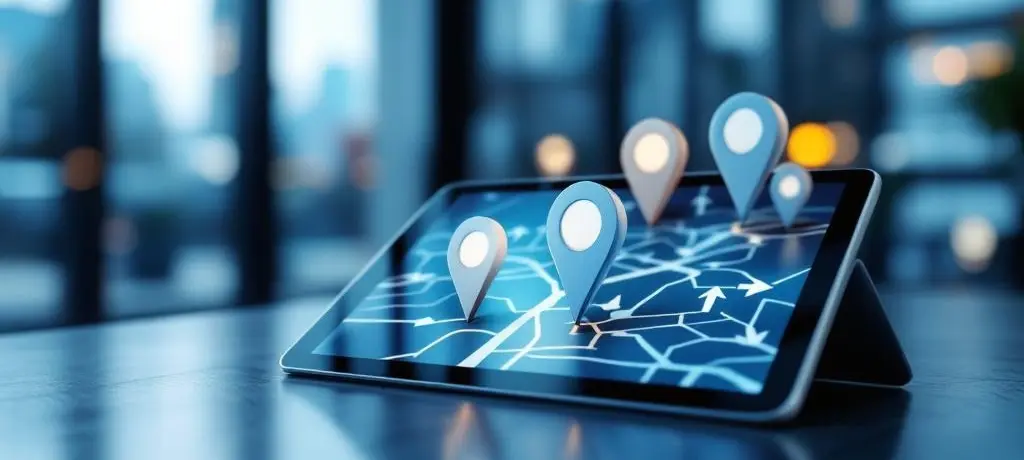
Colorful pins featuring your business logo that stand out while navigating the map or creating a route help your brand get noticed physically. This ad type is particularly eye-catching for users who are shopping spontaneously or are new to the area. For instance, a driver using navigation may see a promoted pin for a coffee shop along their route and decide to divert there. Capturing such micro-moments is central to local marketing strategies in 2026.
Local Search Ads
This refers to your business appearing at the top with the "Ad" label in location-based searches in the Google Maps app or mobile browser. These results not only include location information but also your business rating, hours of operation, and active promotions. The E-E-A-T criteria come into play here to earn user trust; a high-rated and up-to-date profile directly affects the ad's click-through rate (CTR). Supporting your advertising strategy with Google Map SEO services allows you to benefit from the synergy of organic and paid visibility to stand out in local competition.
"In 2026, local advertising is not just about being visible; it is about being the 'response center' that provides the most relevant and fastest solution to the user's current need."
Preparing Google Business Profile for Ads: Basic Requirements
The foundation of a successful Google Maps advertising campaign is a complete and optimized Google Business Profile (formerly Google My Business). Before allocating a budget to ads, you must ensure that your profile meets 2026 standards. Google’s AI algorithms deeply analyze the accuracy and currency of the data in your profile when deciding who to show your ad to.
The images in your profile need to be high resolution, your hours of operation (including holidays) should be entered accurately, and your service areas must be clearly defined. Moreover, responses to customer reviews represent your business's trustworthiness. Unanswered negative reviews can instantly undermine the trust of customers arriving through the ad. During this process, you can use resources like the issue of Google business reviews not showing to make your profile flawless from any technical glitches.
Additionally, the "Product Catalogs" and "Instant Booking" features added to profiles in 2026 are elements that directly affect advertising performance. When a user clicks on your ad and can book an appointment or check stock availability without leaving the map, your conversion potential increases by 40%. The expert team at 212 Medya ensures that your profile is equipped with all these modern features before ad setup, thereby maximizing your return on advertising spend (ROAS).
Strategies to Increase Conversion: Step-by-Step Setup and Targeting
One of the most common mistakes when setting up Google Maps ads is targeting too broad a geographical area. In 2026, precision targeting (Geofencing) techniques are much more advanced. Depending on the type of your business, for example, a radius of 5 km may be sufficient for a restaurant, while this distance may extend to 20 km for a specialized clinic. The key is to define the "influence area" where you can serve and that customers are willing to travel to.
- Enable Location Extensions: Connect your Google Ads account to your business profile to activate location extensions. This is a mandatory first step for your ads to appear on maps.
- Negative Keyword Lists: Protect your budget by filtering out searches (e.g., "free," "how to") that relate to your keywords but are not services you provide.
- Local Campaign Maximum Performance (PMax): In 2026, Google’s PMax local campaigns use artificial intelligence to distribute your ad across YouTube, Gmail, and Maps in a way that yields the best conversion.
- Bid Adjustments: Increase your bids during the hours your store is open or on days when there is high traffic in your area to guarantee your visibility.
Each of these strategic steps requires technical knowledge and continuous optimization. Your competitors in the local market are also using similar tools; therefore, in-depth data analysis is essential for making a difference. Working with a professional Google advertising agency means not just running ads but having a strategy that converts data into revenue.
Performance Analysis: Which Metrics Are Truly Important?
Measuring success in Google Maps ads is different from a standard e-commerce site. Our focus here is not on website traffic but on "local actions." As of 2026, the Google Ads panel can report with much higher accuracy whether users physically visited the store after seeing the ad (Store Visits).
The key KPIs (Key Performance Indicators) you need to measure are: Getting Directions, Click-to-Call, Message Sending, and Reservations. These metrics show whether your ad is truly creating physical value. If your directions number is high but your sales are low, it may indicate an issue with your in-store experience or incorrect directions on the map. It would be beneficial to follow current 2026 data from authoritative sources like Search Engine Journal - PPC Industry Success Metrics to compare your performance against industry averages.
Additionally, to understand the quality of traffic driven by your ads, Google Analytics 4 (GA4) local event tracking also plays a critical role. Did the user visit your contact page from the ad, or did they engage directly through the map? Dissecting this data allows you to determine which channel to allocate your ad budget to in the most efficient way. At 212 Medya, we transform all this complex data flow into meaningful reports so that your business can see clear growth figures.
Prominent Trends in Local Advertising in 2026
Technology keeps advancing, and the advertising infrastructure of Google Maps is continuously evolving. In 2026, there are three main trends shaping local marketing: Voice Search Optimization, Integration with Visual Search, and Predictive AI. Now users can reach your ads not just by typing but by saying, "Hey Google, find the nearest open pharmacy." This necessitates that our keyword strategies be more natural and closer to conversational language.
On the other hand, map ads that work in conjunction with Google Lens technology allow a user to see the ad or special discount of a shop when they point their phone camera at it while walking down the street. This augmented reality (AR) experience completely dissolves the boundary between the physical and digital worlds. Keeping pace with this technological transformation can allow your business to stay years ahead of your competitors.
Finally, Google’s predictive artificial intelligence can provide local recommendations to users based on their past habits even before they search. For example, an ad for a store selling healthy drinks along a route could automatically be displayed to a user who goes to the gym every Saturday morning. Properly processing data at this level of targeting and fine-tuning your local SEO services is vital.
Why You Should Work with 212 Medya?
Competing in the local market is much more than simply setting an advertising budget. In the 2026 world where algorithms change in seconds, it requires an expert touch to maintain and grow your business's digital presence. At 212 Medya, with our deep expertise in Google Maps ads, we manage your budget to provide the highest conversion.
We don’t stop at just technical setup; we offer a wide range of consultancy from managing your business profile's reputation to competitor analysis. Our aim is not just to get clicks but to ensure that your business's phones ring and new customers walk through your door. If you want to increase your market share in your region and make the most efficient use of 2026's modern advertising tools, you can contact our expert team and hear about our tailored strategy.
Frequently Asked Questions (FAQs)
How much budget should I allocate for Google Maps advertising?
The budget varies depending on the sector you operate in, the level of competition in your city, and the size of the area you are targeting. Trends in 2026 indicate that local businesses can start with daily amounts ranging from 100-200 TL and scale based on performance. What matters is not the amount of the budget but how well that budget is optimized.
How long does it take for my ads to appear on the maps?
Once your Google Ads account and Business Profile are correctly connected, your ads typically get approved and go live within 24 to 48 hours. However, a monitoring period of about 2-4 weeks is recommended for full performance to settle and AI to complete its learning process.
Can I only advertise during specific hours?
Yes, thanks to the "Ad Scheduling" feature offered by Google Ads, you can ensure that your ads are shown only during the hours your store is open or within time frames when you can answer phones. This is a professional setting that protects your budget from inefficient spending.
Do negative reviews affect ad performance?
They do not directly affect ad approval but can significantly lower your conversion rate. In 2026, consumers still check the business rating even when they see an ad. For businesses with ratings below 4.0, advertising costs per click may increase over time due to low user engagement.