
Headless E-Commerce Transformation: Why You Should Move Away from Traditional Infrastructures in 2026?
What is headless e-commerce? Why should you abandon traditional infrastructures in 2026? Discover ways to enhance speed and conversion with API-first commerce.
You are directing high-budget advertisements to your e-commerce site, your traffic is increasing every day, but are your conversion rates stagnant? Perhaps your users are losing patience as they wait for the page to load on mobile devices and fleeing to your competitors. We are in the year 2026 and the pace of digital commerce has reached a point that traditional systems can no longer handle. In practice, we often see this: Many SMEs, while trying to respond to modern user expectations with the cumbersome infrastructures they established years ago, are unknowingly leaving a significant portion of their potential revenue on the table. So, what is the way to overcome this bottleneck and prepare your brand for the future? The solution lies in the Headless E-Commerce model, the biggest technological leap of recent years.
What is Headless E-Commerce? The New Architecture of Modern Commerce
Headless e-commerce is a software architecture where the front end (the visible part to the user) of an online sales platform is completely separate from the back end (where data and logical operations are executed). In this structure, content and commerce functions can be flexibly delivered to any channel or device by operating under the API-first commerce principle.
In traditional structures (monolithic), the front end and back end are tightly coupled. When you want to change a template, you risk disrupting the balance of the entire system. However, in the world of 2026, brands must be agile. Based on the experience we have gained while working with our clients, businesses that have escaped the monolithic structure can achieve significant speedups in their campaign preparation processes. This is because designers can focus solely on user experience (UX) without dealing with the backend code, while developers can optimize data security and speed through APIs.
The headless architecture is not just a technical choice; it is also a strategic business decision. This system allows your brand to provide a consistent shopping experience not only on its website, but everywhere from smartwatches to IoT devices, social media stores to physical in-store kiosks.
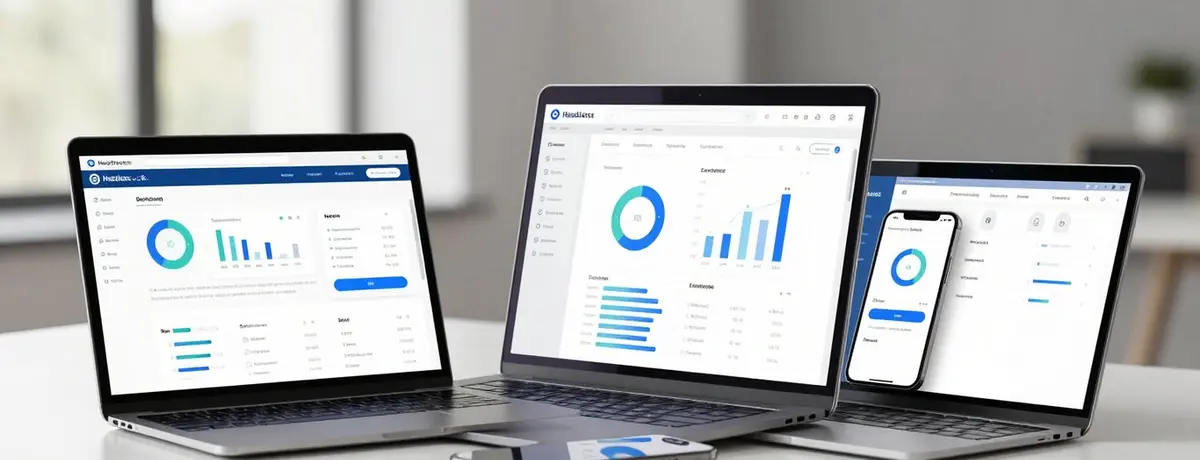
A technological visual demonstrating data transfer in headless e-commerce architecture across different devices
API-First Commerce: The Digital Backbone of 2026
In 2026, the concept we focus on the most in the projects where we provide e-commerce consultancy is the API-first commerce approach. In traditional systems, APIs (Application Programming Interface) function like a "patch" added later to the system; in headless systems, it resides at the very heart of the architecture. This means that each function (cart, payment, product catalog) operates as an independent service.
So, why is this so important? In a scenario we encountered at a leading company, due to the traditional infrastructure, the mobile application pulled stock data from the website with a 5-minute delay, leading to serious customer complaints during campaign periods. Once a transition to an API-first structure was made, all channels began to be fed instantly from a single data source (Single Source of Truth). This is a factor that directly affects operational efficiency and customer loyalty.
Professional Tip: If you are planning a transition, instead of changing your entire system at once in the first step, you can start with a hybrid model by moving the area that experiences the most bottleneck (for example, just the checkout process) to a headless structure. This allows you to minimize your risk while observing performance increases.
Why Should You Move Away from Traditional Infrastructures in 2026?
Why is the era of traditional (Monolithic) systems coming to an end? In 2026, we are in a period where users' average attention span has dropped to 40-47 seconds, and Google has positioned Core Web Vitals metrics as a significant ranking factor; the cost of clumsiness is very high. However, it is essential to remember that Google still sees good content and relevance as the most important ranking factors. Recent studies conducted by Gartner show that companies adopting modular commerce structures can offer new features faster than their competitors.
The three biggest obstacles encountered in traditional infrastructures are:
- Performance Ceiling: No matter how much you optimize, the code clutter that monolithic structures bring cannot advance page speed beyond a certain point.
- Limited SEO Flexibility: Traditional platforms confine you to their own URL structures and templates. However, under corporate SEO services, we want to manipulate the HTML structure of each page freely.
- High Maintenance Costs: Having to test the entire system for a minor update is a waste of time and cash.
The following table summarizes the differences between traditional systems and headless architecture based on 2026 market standards:
Feature
Traditional Infrastructure
Headless E-Commerce
Page Load Speed
Medium / Slow (2.5sec+)
Ultra Fast (0.5sec - 1sec)
UX/UI Flexibility
Limited to Templates
Unlimited Customization
Channel Variety
Web and Basic Mobile Only
Omnichannel (IoT, VR, Social)
Development Speed
Slow and Risky
Very Fast and Independent
SEO Performance
Platform Restricted
Full Control (Maximum Score)
If you are managing a basic e-commerce site, traditional structures may suffice; however, if you want to scale and compete in the global market, these limitations are the biggest barriers to your growth.
Protecting SEO During the E-Commerce Infrastructure Change Process
Many business owners postpone changes with the fear that "If I change my infrastructure, will my Google rankings plummet?" They are right to be concerned; because a faulty transition process can annihilate years of effort in just a few days. In a transformation we conducted for one of our e-commerce clients, we managed to increase organic traffic by 15% by configuring 301 redirects and schema markup at the API level. This is only possible with the right strategy.
It is critical to follow these steps during the transition process:
- Current State Analysis: Determine which of your pages receive the most traffic and which URL structures need to be preserved.
- API Integration and Data Migration: Move product, customer, and order data to the new headless backend without experiencing data loss. We discuss this topic with technical details in our e-commerce infrastructure change guide.
- Frontend Selection: Build an SEO-compatible front end (Server Side Rendering - SSR) with modern technologies like React, Vue.js, or Next.js.
Professional Tip: Your page speed will increase tremendously in headless systems, improving your Core Web Vitals scores. It is vital to monitor Google Search Console data immediately after the transition and fix errors within 24 hours to take advantage of this benefit.
A professional expert managing e-commerce data analysis and infrastructure transition
The Hidden Costs and Benefits of Headless Transition
No technological transformation is "free." The initial setup cost of headless e-commerce may be higher than that of ready-made packaged systems. However, when looked at from the perspective of Total Cost of Ownership (TCO) in the economic scenario of 2026, headless systems become more cost-effective in the long run. Instead of paying thousands of dollars in licensing fees every year, you experience the freedom of having your own architecture.
According to our experience working with clients, a mid-sized business transitioning to a headless structure can achieve potential savings in server costs while recovering investment (ROI) within an average of 12-18 months due to increased conversion rates (CR). Additionally, due to the modularity of the system, integrating new technologies that emerge in the future (such as AI-based personal shopping assistants) becomes just a matter of a few weeks of development work.
Key Points
- Speed is Everything: In 2026, a 1-second delay means a 7% loss in mobile conversions; headless solves this issue at its core.
- Flexibility: While your designers work on the front end, your backend operations continue uninterrupted.
- Security: The back end not being directly exposed to the internet can reduce certain cyber attack surfaces compared to traditional architectures, but headless architectures require a different focus for client-side security risks due to the increased use of third-party JavaScript and APIs.
- Future-Ready: Your infrastructure is always ready for voice search, VR stores, or next-generation payment systems.
- SEO Advantage: Because you can create your own HTML structure, you provide Google bots exactly what they want.
Frequently Asked Questions
Is headless e-commerce suitable for small businesses?
It is generally more efficient for medium and large-scale businesses with high growth targets. However, boutique brands wishing to offer a very unique user experience in a niche market can also stand out by choosing a headless infrastructure.
How long does the transition process take?
Depending on the size of your existing data and the desired customizations, the process can take anywhere from 3 to 9 months. Getting professional support allows you to optimize this process.
Will my data be lost when transitioning from a traditional infrastructure to Headless?
If a proper data migration strategy is applied, there will be no data loss. Order history, customer memberships, and product reviews can be safely transferred.
Is headless better for SEO?
Yes, because server-side processing (SSR) and full code control maximize page speeds. This provides a direct advantage in Google rankings.
Can I manage this system without my software team?
Headless systems require more technical knowledge. While easy-to-use panels (like Contentful, Strapi, etc.) can be set up for content management, it is healthiest to work with a professional agency for the continuity of the infrastructure.
Conclusion: Stay One Step Ahead of the Competition in 2026
The world is changing, technology is accelerating, and consumers' tolerance is decreasing. The headless e-commerce transformation is not just a trend; it is insurance for your brand's digital presence in 2026 and beyond. Escaping the clumsiness of traditional structures and embracing flexibility with an API-first approach is not just a technical success, but a strategic move that will increase your market share.
Having an experienced guide by your side on this seemingly complex but highly rewarding transformation journey minimizes your margin for error. As 212 Medya, we consider the technical infrastructure, SEO strategies, and user experience design that your brand needs as a whole. With the right strategy, results accelerate; let’s take your brand among the winners of 2026 together.
To initiate your business's digital transformation and create a tailored roadmap, get a quote now or contact our expert team.