
The Secret to Finding Potential Customers Without Increasing Your Advertising Budget: How Do You Make Boring Products Attractive?
Is your product technical and complex? Learn how to find more customers without increasing your advertising budget. Discover the most effective B2B marketing secrets of 2026!
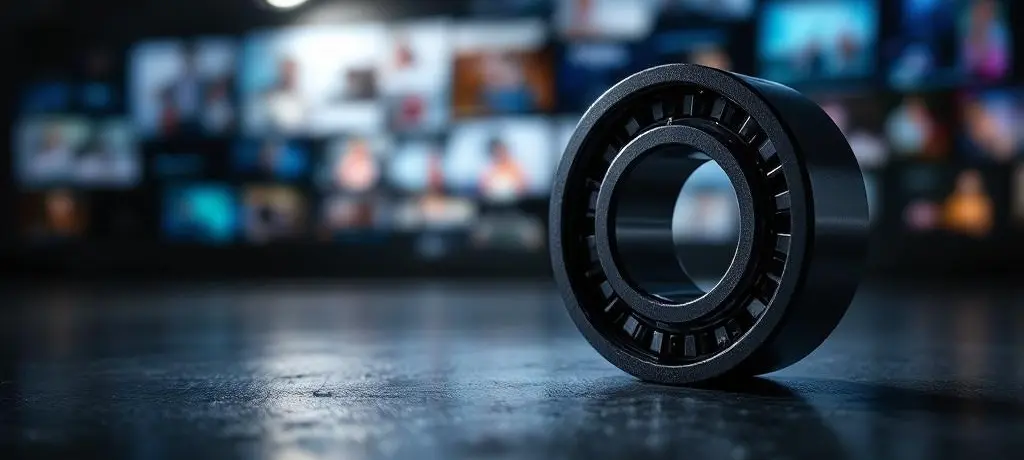
Are thousands of visitors coming to your website, but your phones never ring? You have unwavering faith in your product's technical capacity, quality, and durability; however, do you feel a dullness on the other end when you try to convey these details to potential customers? Particularly for SME owners and marketing managers operating in the B2B sector or technical product groups, the biggest handicap they face in 2026 is focusing on the product's functionality while neglecting its "emotional and solution-oriented" story.
Increasing advertising budgets uncontrollably is like pouring more water into a bucket with holes. During our years in the industry at 212 Medya, we have observed that hundreds of companies trying to grow by simply increasing their budgets are actually overlooking a much more fundamental problem: The art of making the product attractive. If your product is a bearing, industrial software, or a complex insurance policy, you cannot present it to the end user as a lifestyle brand; however, you can position it as the "hero" that solves the biggest problem in your customer's life.
In this guide, we will step by step examine how to find more qualified leads (potential customers) by keeping your advertising budget fixed (or optimizing it) in the changing digital ecosystem of 2026, and how to transform seemingly boring products into desirables.
What Is Boring Product Marketing?
Boring product marketing is the process of making products, which primarily focus on technical specifications, have a hard-to-establish emotional connection and generally low interest levels, attractive through strategic narratives that focus on solving specific problems faced by the target audience. This approach aims to increase conversion rates by narrating not only what the product is, but also what obstacle it removes in the user's life.
In practice, we often see this: A company spends millions to explain how many bars its hydraulic valves can withstand. Yet the real concern of the purchasing manager in the target audience is the thousands of dollars in production time that will be lost if the line stops. In the 2026 market, it's no longer features being sold, but "assurance" and "time savings." At this point, creating the right strategy reduces your advertising costs while elevating customer quality. You can start by refining your basic content; however, a professional perspective will always create a multiplier effect for advanced conversion optimization.
If you think your product is boring, you might just be looking at it from the wrong perspective. As highlighted by the HubSpot Inbound Marketing Methodology and Guide, any content that adds value to the customer's journey can make even the most technical products a focal point.
The Invisible Dangers of Increasing the Advertising Budget
Many managers instinctively choose to increase their Google Ads or Meta budgets by 50% when sales drop. However, in 2026, throwing more money at algorithms does not always translate to more sales. On the contrary, if targeting and message alignment is weak, budget increases will only raise "fake clicks" and irrelevant traffic. This situation reduces your ad account's quality score, further raising your cost per click (CPC) in the long run.
Based on our experience working with our clients, companies that focus on "message clarity" rather than budget increases start gathering 60% more forms at 40% lower costs within six months. The table below compares the estimated performance data of a company that follows a budget-focused approach with a company that follows a strategy-focused approach in 2026:
Kriter Sadece Bütçe Odaklı Yaklaşım Stratejik İçerik & Mesaj Odaklı
CPA (Edinme Başı Maliyet) Sürekli Artış Eğiliminde Stabil ve Azalan Trend
Müşteri Niteliği Düşük (Fiyat Odaklı) Yüksek (Değer Odaklı)
Dönüşüm Oranı (CR) %0.5 - %1.5 %3.5 - %7.0
Uzun Vadeli Etki Reklam Kesilince Durur Marka Otoritesi İnşa Eder
Yatırım Getirisi (ROAS) Düşük / Marjinal Yüksek ve Katlanarak Artan
As seen, it is more sensible to plan how to convert the existing traffic rather than uncontrollably expanding the budget. The biggest lie in B2B marketing is that customers only look at logical arguments. Even in 2026, decision-makers are still human and need an emotional trigger.
Transitioning from Technical Details to Benefits: Buying Results, Not Features
If you are selling software, "cloud-based architecture" is a feature. "Access your data from anywhere in the world, in seconds, and eliminate dependency on the office" is a benefit. The biggest enemy of boring products is catalog information. Catalog information provides information but does not excite.
In one of our e-commerce clients, we were selling industrial generator parts. Initially, we focused on technical codes and material quality in the advertising texts. Click-through rates were at rock bottom. Then we changed our strategy to "If you can't afford even a second of downtime in your factory, we deliver spare parts within 2 hours." The result? Click-through rates (CTR) increased by 300%. Because we were selling "production continuity," not just a part.
"People don’t want to buy a drill bit; they want a hole in the wall." - Theodore Levitt
When we adapt this philosophy to the digital world of 2026, we understand how even technical products should be presented on social media platforms (like LinkedIn). While presenting technical data to engineers through LinkedIn ads, we need to present cost advantages to purchasing managers. You cannot capture everyone with a single ad copy.
Professional Tip: Write down all the features of your product. Then add answers to the question "What does this do for the customer?" next to each feature. Use only this second column in your ads.
The Power of Visualization: How Do You Explain Complex Systems?
The fastest way to make a boring product attractive is to simplify it visually. In 2026, thanks to AI-powered visual production tools and interactive UI/UX designs, we can turn even the most complex machine rooms into works of art. If you are a logistics company, instead of placing a photo of your trucks, a dynamic infographic showing the intercontinental journey of a package would be much more impressive.
The method we applied in a leading industrial kitchen company was as follows: Instead of using static photos of the products, we used appetizing videos of the meals prepared in that kitchen and short clips where chefs shared how satisfied they were with the kitchen ergonomics. Although the product (stainless steel countertop) remained in the background, the outcome (happy employees and fast service) was front and center.
Visualization is not just an aesthetic choice; it is also a tool for building trust. Explaining a complex service with a simple flowchart eliminates the customer's lingering question, "Is this too difficult?" A landing page supported by UI/UX design services can yield 500% more conversions than a technical document.
Strategies for Collecting Potential Customer Data
The secret to finding new customers without increasing your advertising budget is to use valuable content known as a "Lead Magnet." If you sell a boring product, instead of asking people to directly fill out a "request a quote" form, offer them a problem-solving guide related to the industry.
For example, we prepared an e-book titled "Guide to Reducing Energy Costs in Factories in 2026" for a solar panel company. We set up a potential customer data collection system that only asked for email and industry information to download this guide. The ads promoted the guide, not the panel itself. The conversion rate of the data collected through this method was four times higher than direct sales ads.
Application Suggestion: Identify the 5 most frequently asked questions in your industry. Prepare a 3-page PDF containing answers to these questions and offer it for free via a landing page. This is the cheapest and most effective way to gain trust in 2026.
The Evolution of SEO and Content Marketing in 2026
Google's AI-powered search experience (SGE) was fully established in 2026. Now you must be not just about keyword stuffing, but becoming an "information authority." The biggest advantage of boring products is that there is very little quality content in those areas. If you become the authority that explains technical terms and complex processes in the simplest and most accurate way in your industry, Google will promote you to the top without requiring an advertising budget.
To give a real-life example; the blog series "Customs Processes with Artificial Intelligence" we prepared for a customs consultancy firm brought the firm to the top of Google searches. Without spending on ads, they started receiving more than 50 qualified corporate applications every month. The key to this success was producing content with depth that competitors either dared not write or were too lazy to produce. When purchasing content marketing services, you should demand that your agency not only writes the texts but also understands your industry and outlines a strategic roadmap.
Remember, in 2026, search engines are looking for not only the answer but also the "experience." Google's helpful content updates clearly show this. You can write blogs by yourself, but working with an SEO agency ensures that this content is presented in the correct technical structure (schema data, speed optimization, etc.).
What Should You Do Now? A Roadmap
No matter how "boring" your product is, it is in your hands to make it the shining star of the marketing world. Follow these steps to achieve success in 2026:
- Persona Analysis: Who buys your product? Who is the decision-maker? What is their biggest fear? Clarify the answers to these questions.
- Message Optimization: Remove technical terms, and replace them with results. Instead of "3000 RPM," say "Energy Saving with High Efficiency."
- Visual Revision: Update the visuals on your website and in your ads with AI and modern graphic trends to show the benefits provided by the product.
- Create a Lead Magnet: Start collecting potential customer data by offering free value.
- Measure: Analyze which channel brings higher-quality customers and shift your budget only to that area.
You can try all of this through trial and error on your own. However, in the digital competition of 2026, time is far more valuable than money. A poorly configured campaign not only wastes your budget but also causes your market share to slip to competitors. At 212 Medya, we specialize in transforming brands in technical and complex sectors into unreachable market leaders by translating them into the language of digital. With our strategic approach, we ensure that every penny of your advertising budget translates into qualified leads rather than being thrown away.
If you're curious about how to achieve bigger results with your existing resources without increasing your advertising budget, come, let's explore the potential of your brand over a cup of coffee together. Witness how your "boring" product can create a demand explosion in the market with the special strategy we prepare with our expert team.
Schedule your free preliminary analysis appointment immediately and take a step ahead in the digital marketing world of 2026.